Showing posts with label sexual abuse recovery. Show all posts
Showing posts with label sexual abuse recovery. Show all posts
Monday, February 16, 2015
[Video] A Real-Life Survivor
This is a beautiful video we all can benefit from seeing. It will break your heart and then send you to a place of joy and triumph for this incredible girl and her incredible story. You are not alone, it is not your fault, and you are not a victim. Thanks for sharing, Anna.

Thursday, November 7, 2013
What If I'm not sure?
Most of the people I speak to in counseling have come to me because they want to confront the sexual assault and/or abuse in their past. But not all of them.
Some of them, and maybe even some of you, think they might have been sexually abused or assaulted in the past, but don't know for sure.
This is a touchy but important concern. It's touchy, because the reputation of a person or people stands on the testament of an experience a survivor cannot say for sure has happened. But it's also important, because it's very possible that something abusive did happen to a person that they are unable, for very legitimate reasons, to remember.
For example, a survivor may have been very young when the alleged abuse occurred. They may have flashes of memory, body memory, or uncomfortable feelings around a certain person, but not a specific recall of an abusive circumstance.
It's also possible for survivors to subconsciously block out abuse that is too painful to remember. This is one of the more controversial circumstances of lost memories, as humans are highly suggestible creatures and it has been proven that it is possible to implant false memories in another person through suggestion. This doesn't mean that every case of blocked memory is false, but it does make it harder to know even for yourself.
Finally, a survivor may have been under the influence of a date-rape drug or substance intoxication, and the effects of these chemicals have erased or altered the events in their memory.
However it happens, being unable to remember clearly - and therefore, unable to prove or disprove the feeling that something bad happened - can be maddening to experience.
It seems there is no solution. Unless someone else was a witness, you have no way of knowing the truth. And that can make you feel helpless, angry, and unsure of who to trust.
Well, I can't tell you for sure whether or not something happened to you. If you, your therapist, and your law enforcement officer feel it is appropriate, by all means, investigate the situation to the best of your ability. But when you don't want to do that, or the search doesn't turn up what you want it to, there are other ways to reclaim your power and control.
Sit down and put together a "case" for and against the situation. One approach is to objectively look at the evidence, even if it's just for yourself. You may also invite a trusted friend or family member to help you look at what you know. Your decision, for or against what happened, may not hold up in a court of law, but it can give you a sense of peace.
Ask yourself, "What would it change?" If it was true, and if it was not true? Is it possible you might be afraid of one outcome or the other, and that is affecting how you look at the past? And, if it wouldn't change anything, do you really need to know?
Decide what YOU think and what that means for you. Saying it did happen, it didn't happen or you don't know are equally acceptable choices. The point is to take your power back by choosing one of these choices to be true until faced with further evidence to the contrary. This is distinguished from denial, which is a coping mechanism to avoid facing an unwelcome truth. You only truly regain control when you have thoroughly confronted all options and chosen to move ahead based on your own will.
It is important that you know that none of these choices have legal implications...but they're not meant to. This isn't about deciding what happened for the point of justice, though that is also important. Instead, it's about finding peace and learning to set aside an old issue.
Perhaps more importantly, it's about learning to trust yourself again.
 |
| Image Courtesy of David Castillo Dominici/Freedigitalphotos.net |
Some of them, and maybe even some of you, think they might have been sexually abused or assaulted in the past, but don't know for sure.
This is a touchy but important concern. It's touchy, because the reputation of a person or people stands on the testament of an experience a survivor cannot say for sure has happened. But it's also important, because it's very possible that something abusive did happen to a person that they are unable, for very legitimate reasons, to remember.
For example, a survivor may have been very young when the alleged abuse occurred. They may have flashes of memory, body memory, or uncomfortable feelings around a certain person, but not a specific recall of an abusive circumstance.
It's also possible for survivors to subconsciously block out abuse that is too painful to remember. This is one of the more controversial circumstances of lost memories, as humans are highly suggestible creatures and it has been proven that it is possible to implant false memories in another person through suggestion. This doesn't mean that every case of blocked memory is false, but it does make it harder to know even for yourself.
Finally, a survivor may have been under the influence of a date-rape drug or substance intoxication, and the effects of these chemicals have erased or altered the events in their memory.
However it happens, being unable to remember clearly - and therefore, unable to prove or disprove the feeling that something bad happened - can be maddening to experience.
 |
| Image courtesy of renjith krishnan/freedigitalphotos.net |
It seems there is no solution. Unless someone else was a witness, you have no way of knowing the truth. And that can make you feel helpless, angry, and unsure of who to trust.
Well, I can't tell you for sure whether or not something happened to you. If you, your therapist, and your law enforcement officer feel it is appropriate, by all means, investigate the situation to the best of your ability. But when you don't want to do that, or the search doesn't turn up what you want it to, there are other ways to reclaim your power and control.
Sit down and put together a "case" for and against the situation. One approach is to objectively look at the evidence, even if it's just for yourself. You may also invite a trusted friend or family member to help you look at what you know. Your decision, for or against what happened, may not hold up in a court of law, but it can give you a sense of peace.
Ask yourself, "What would it change?" If it was true, and if it was not true? Is it possible you might be afraid of one outcome or the other, and that is affecting how you look at the past? And, if it wouldn't change anything, do you really need to know?
Decide what YOU think and what that means for you. Saying it did happen, it didn't happen or you don't know are equally acceptable choices. The point is to take your power back by choosing one of these choices to be true until faced with further evidence to the contrary. This is distinguished from denial, which is a coping mechanism to avoid facing an unwelcome truth. You only truly regain control when you have thoroughly confronted all options and chosen to move ahead based on your own will.
 |
| Image Courtesy of markuso/FreeDigitalPhotos.net |
It is important that you know that none of these choices have legal implications...but they're not meant to. This isn't about deciding what happened for the point of justice, though that is also important. Instead, it's about finding peace and learning to set aside an old issue.
Perhaps more importantly, it's about learning to trust yourself again.
Tuesday, May 21, 2013
It's My Fault, Part Two. Why It Sticks.
While
I hope you have taken what I said in the previous letter to heart, I
know it's not a mindset shift that lends itself to easy change. More
often, the shift from "it's my fault" to "the perpetrator is to blame"
clings harder than one day's talk can shake loose.
I
hope you feel freer after reading the previous letter. But it's
possible you still have some doubts. Maybe you think, "She just doesn't
know my situation. If she knew, she'd get why it's my fault."
You
may also want to let it go, but the blame still creeps back in. You go
to sleep feeling good, and then at two a.m. you're wide awake thinking
of all you could have done differently.
 If that's the case, let me assure you, you're not the only one.
As
much as I'd like it to be easier, it's very common to hold onto the
self-blame longer than is necessary. I've found two reasons why that
seems to happen.
First,
you're in the minority. Sad as it is, and as common as sexual assault
is, at the time of this writing more people than not will blame the
victim for their assault. I hope and pray that at some time in the
future I can take out this sentence, but for now, I can't. To little is
understood about the nature of sexual assault, and too many survivors
are caught up in blame themselves right now, for most people to accept
blamelessness for being assaulted.
The
first time you tell someone of your assault, the first questions are,
"why" and "how," leading to the assumption that you made critical errors
in judgment to lead you to this unfortunate circumstance.
 |
| Huffington Post: Click For Story |
After
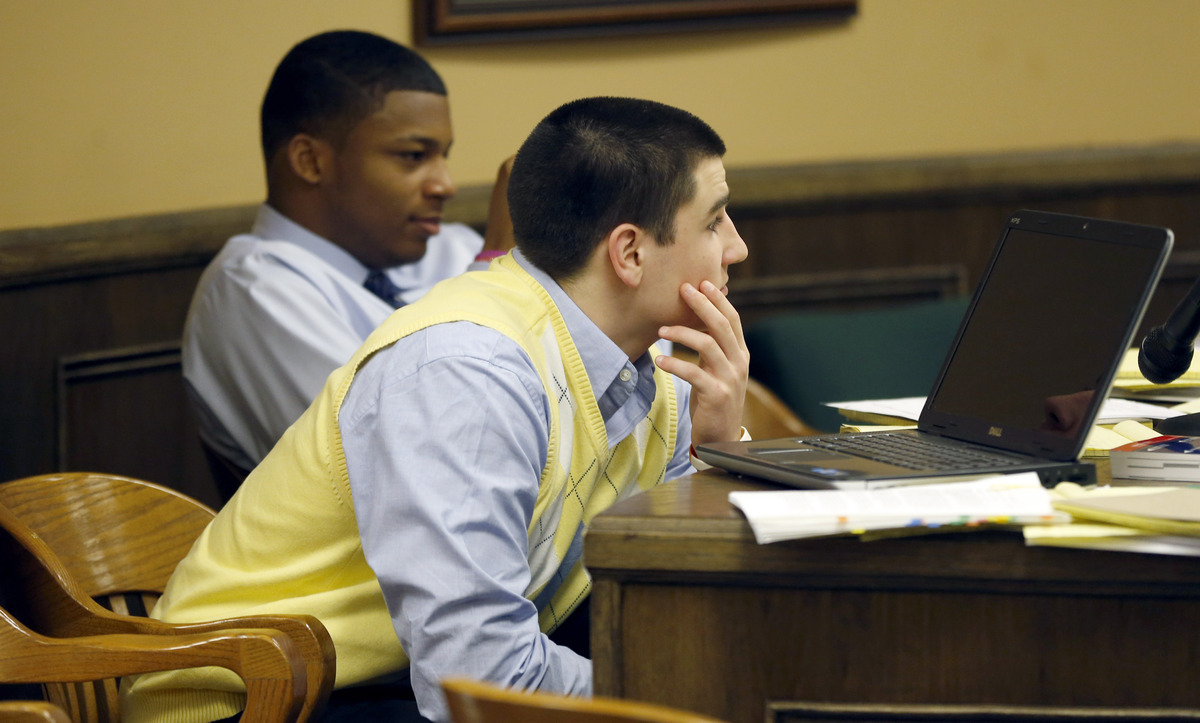
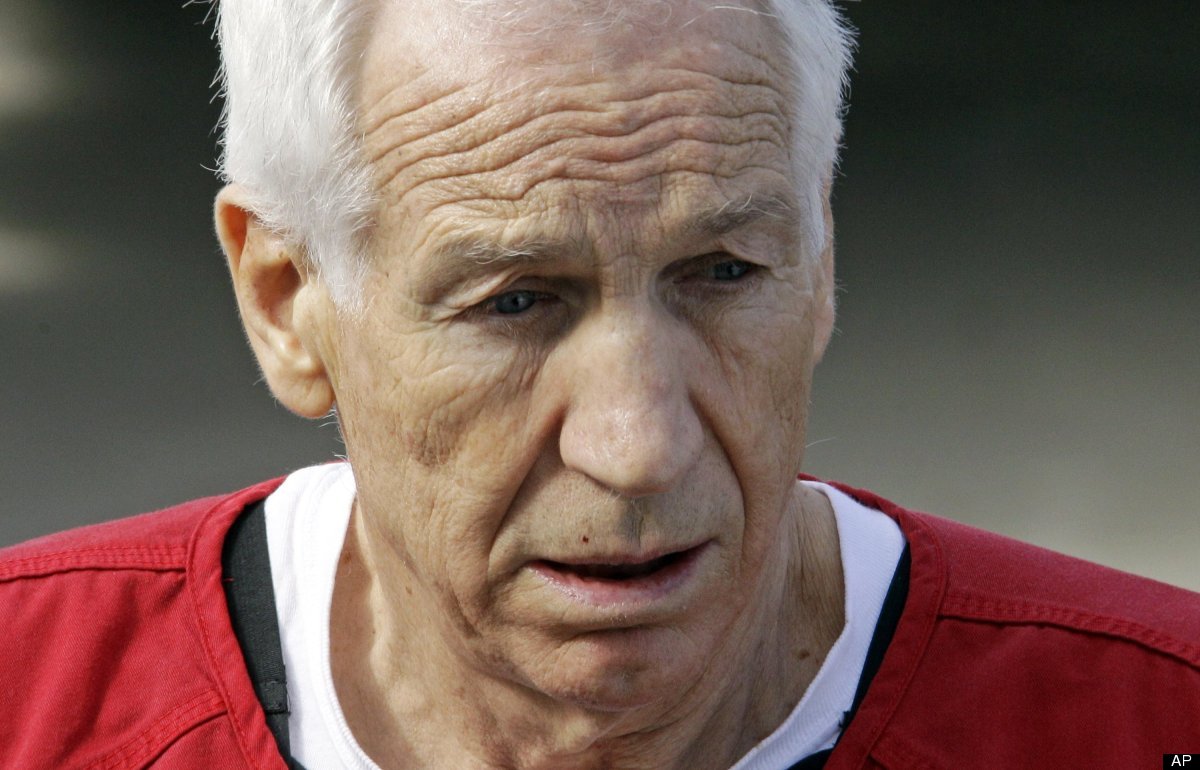
Steubenville, Sandusky, and countless others, the public outcry is
against the poor accused perpetrators, and seeks to defame the survivors
at any cost. Despite the fact that false reports for assault are as low
or lower than other crimes. Despite the fact that perpetrators quite often
plan to be public figures with plausible deniability in case this kind
of thing were to happen. And, despite the fact that not many people
would put themselves through that kind of media hell if they were
telling a lie.
This
is the ongoing battle of surviving: reminding yourself everyday,
despite well-meaning or harshly-meant criticism of your character, that
this is not your fault. That until you contribute to the solution by
freeing yourself from unjustified guilt, the system will not change.
It's not fair.
 |
| Jerry Sandusky Trial: Click for Story |
But you can do it for yourself.
As
challenging as that is, however, the second reason is far more
difficult than even the first. It has to do with that v-word. No, not
that one. The other one. Victim. Another major reason survivors cling to
self-blame is because not to do so is to invite utter chaos. If it
wasn't their fault - if it wasn't your fault - then it was wholly
outside of your control.
That's
the WORST feeling in the world, especially to a survivor, who has
already had so much control taken away. As destructive as it is, you may
be tempted to hold onto that self-blame as a security blanket against
the empty uncertainty of not having any power whatsoever. They're both
terrible, but one feels far worse.
But
is it, really? I know it's horrible to feel out of control. Every adult
deserves a healthy level of self-control. It's a basic human right.
But,
is this the kind of control you want to have? Do you really want to
hold onto this control when it means villianizing yourself in the
process.
I
know it's terrifying. But keep in mind, letting go of this control
doesn't mean you have no control. No matter what, you always have
control over your own mind. No one can take that away from you, no
matter how awful.
 Viktor
Frankl was a psychiatrist in Austria during the beginning of the
Holocaust. He could have escaped after the Nazi invasion in 1939, but
stayed to take care of his patients, including falsifying records to
protect those under his care from being euthanized for being unfit.
Eventually he, his parents, his brother, and his wife were all forced
into camps. He was the only one of that group who survived, having lost
his family, his practice, and his life's work.
Viktor
Frankl was a psychiatrist in Austria during the beginning of the
Holocaust. He could have escaped after the Nazi invasion in 1939, but
stayed to take care of his patients, including falsifying records to
protect those under his care from being euthanized for being unfit.
Eventually he, his parents, his brother, and his wife were all forced
into camps. He was the only one of that group who survived, having lost
his family, his practice, and his life's work.
Still, after all that, he said this:
"Everything
can be taken from a man but one thing: the last of the human freedoms -
to choose one's attitude in any given set of circumstances, to choose
one's own way."
No
one can take all control away from you, though they can abuse it
terribly. Who you are and who you will be is your absolute possession,
today and every day.
Do you ever blame yourself as a way to keep control of the situation? What’s another, healthier way you might regain control of the situation instead?
Tuesday, May 14, 2013
It's My Fault
It's my fault. Have you ever thought that? Before you answer, let me give you some variations on that theme:

 Someone
should be able to stand in front of someone else buck naked and not get
raped. If anyone else was telling you their story of assault or abuse,
you wouldn't blame them.
Someone
should be able to stand in front of someone else buck naked and not get
raped. If anyone else was telling you their story of assault or abuse,
you wouldn't blame them.
I went to his house.

I agreed to the go out with him.
I was drinking.
I was thinking about hooking up with him.
I was wearing my shortest skirt.
What is the common thread in all of these statements? The word I. That one simple little word leads to one major conclusion in your mind:
I went to his house…so it's my fault.
I agreed to the go out with him…so it's my fault.
I was drinking…so it's my fault.
I was thinking about hooking up with him…so it's my fault.
I was wearing my shortest skirt…so it's my fault.
And that's the problem. A crime was perpetrated upon YOU…but somehow you've made it your fault.
It's
not a new problem. It's called blaming the victim, and sexual assault
is the only crime in which blaming the victim is not just accepted, it's
encouraged. But the worst offender is not the media, or your parents,
or your friends…though to be fair they're often a problem too. It's you.
Would you ask a survivor of homicide why they pissed off the murderer? No, you wouldn't. Because nobody survives a homicide. You survived your crime.
If a lock was broken on someone's car door, and they neglected to fix it, would it be their fault that their car got stolen? No, because any level of neglect doesn't justify a crime.
Instinctively,
we know it's insane it blame a murder victim, or someone whose
possessions were stolen. But survivors blame themselves - you blame
yourself - for a crime against you as a matter of course.
The
situation is no different if you were a survivor of childhood sexual
abuse or stranger rape. Children say to themselves, "If I wasn't pretty
my daddy wouldn't have hurt me." Adults say to themselves, "I should
have been more careful." Listen, how long do you have to do this before
you turn the blame on the person who deserves it?
 Someone
should be able to stand in front of someone else buck naked and not get
raped. If anyone else was telling you their story of assault or abuse,
you wouldn't blame them.
Someone
should be able to stand in front of someone else buck naked and not get
raped. If anyone else was telling you their story of assault or abuse,
you wouldn't blame them.
So why blame yourself?
Your challenge today is to shift your thinking.
I went to his house…but I didn't ask to be sexually assaulted.
I agreed to the go out with him…but not to get raped.
I was drinking…so I couldn't give consent.
I was thinking about hooking up with him…but I'm allowed to change my mind.
I was wearing my shortest skirt…so what?
I was a pretty child…but no one deserves abuse.
I should have been more careful…the perpetrator should not have done what they did.
Your turn. What blaming questions have you asked yourself?
Wednesday, May 8, 2013
Will I Ever Get Over This?
Have
you ever asked that question? Most survivors do. Whether you ask the
question in a counseling session, of a fellow survivor, or simply to
yourself, it’s probably on your mind.
Unless
the abuse or assault started from your earliest memories (which can
happen) you probably remember a time before. It can take on a mythical
quality. That time before the assault, when you were free from this
pain.
Innocent.
Hopeful.
Trusting.
Rape
is an aggressive word. So is assault. Accurately so, for they are
physically aggressive acts. But they are also emotionally aggressive
too. An assault takes things away from you on a personal level.
The time before becomes the time you were whole. The time after becomes the time you were broken. Robbed.

“He
took everything from me!” I’ve heard survivors say. And I know to them
it is quite true. But I caution them, and all of you, to avoid thinking
of it in such closed terms.
Can you ever get over this? The simple answer is no.
But the true answer is you can transcend this circumstance and take back the control that was taken from you.
I
think we focus on the wrong thing when we say that we need to get
“over” sexual assault. What most survivors, in my experience at least,
really mean by that statement is that they want to get free of it. And
that is something I wholeheartedly believe in.
How
does someone get free of a history of assault? I cannot give a
comprehensive, universal answer to that question, but I can tell you
what components I commonly see in someone who is free of their abusive
past.

They know who they are outside of the assault. They
are not defined by it. They have their own goals, their own identity,
untainted by the abuse. (Yes, it is possible to have that in the future
if you’re not there now. Hang in there.)
They have a firm grasp of their “story.” They
can recount the assault to safe people and not experience flashbacks.
They have stripped from their story false guilt and blame and placed the
wrongdoing squarely on the perpetrator’s shoulders, where it belongs.
They have found a way to grow from it.
Please don’t misunderstand me in thinking I expect anyone to EVER be
grateful for the assault. If you are, I applaud the courage in that, but
I also don’t think there’s anything wrong with always wishing you
hadn’t gone through it. BUT survivors who have gotten free have
reclaimed SOMETHING about their assault or abuse that is theirs. They
became sexual assault advocates. They wrote a book. They created art.
They protected someone else. They didn’t get to choose what happened to
them, but they chose what came out of it.
They have boundaries.
They don’t allow unsafe people into their lives, and they don’t let
anyone walk all over them. They challenge themselves, but don’t push
beyond their limits. They take care of themselves on a regular basis.
They do not do anything sexually they do not want to, and they do not
have sex out of the idea that they owe someone sex.
When
someone asks me in counseling, “How can I get over this” these are the
goals I keep in mind for them. In my time working with survivors, these
factors go along with survivors feeling free.
So when you ask me, survivor, whether you can ever get over it, you know my answer.
Freedom is possible. Your old self is gone. But your new self is waiting.
Don’t give up. It’s possible.
Please share with us how you’ve known you were healed from an aspect of your assault, or what goals you have for yourself to know when you’re free. We’d love to support you.
Subscribe to:
Posts (Atom)